
Mount Batur Jeep Tour: Routes, Prices & Booking 2026
May 26, 2026
How to Get to Kintamani from Ubud, Seminyak, and Bali Airport
May 28, 2026
Kehen Temple Bali: History, Architecture & Visitor Tips
Amid the hundreds of spiritual destinations scattered across Bali, Kehen Temple often flies under the radar of tourists. Yet, this majestic temple in Bangli Regency holds rich history, beautiful architecture, and deep culture.
Specifically, what makes this hidden temple so special is not just its age. Instead, it stands out because locals have kept it highly authentic. Therefore, for travelers seeking a genuine temple tour, Kehen Temple offers something truly unique. Moreover, the location provides deep tranquility and a direct connection to Bali’s carefully preserved heritage.
Kehen Temple Bali | Tan’s Estate
The History of Kehen Temple and Its Connection to the Bangli Kingdom
Historical records first mentioned Kehen Temple in an inscription from 1204 CE. Interestingly, the name “Kehen” comes from an Old Balinese word meaning fire or hearth. This name points to the temple’s original role as a royal ritual center that kept a sacred flame burning.
Furthermore, as a highly influential site, Pura Kehen served as the main state temple for the Kingdom of Bangli. The kings used this temple as the center for state rituals. Here, they sought spiritual protection and balance before making big decisions. Consequently, a deep spiritual bond formed between the temple and the palace, which shaped the identity of the king’s rule.
Over the centuries, various royal dynasties ruled the Bangli region. These rulers consistently improved the temple complex. For instance, 17th and 18th-century kings directed major renovations. They added beautiful stone ornaments and expanded the famous terraced system. As a result, the core structure remains completely intact today, even after surviving past earthquakes.
Read Other Interesting Article:
About the 11-Tiered Architecture, the Banyan Tree, and Ancient Stone Carvings
Kehen Temple Bali | Tan’s Estate
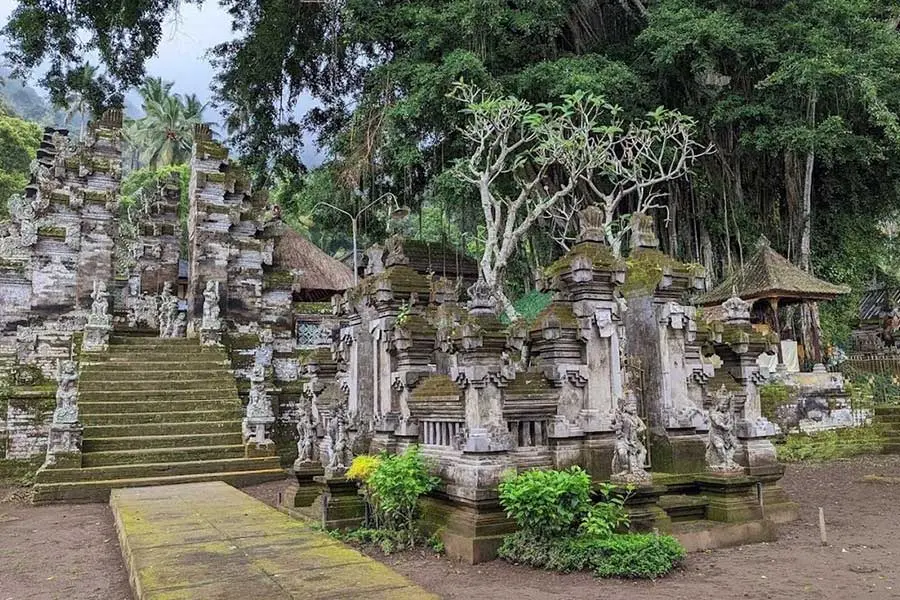
When you enter the main gate, a massive, centuries-old banyan tree immediately greets you. Locals believe protective spirits live inside this tree. In addition, it acts as a spiritual bridge between the human world and the divine realm.
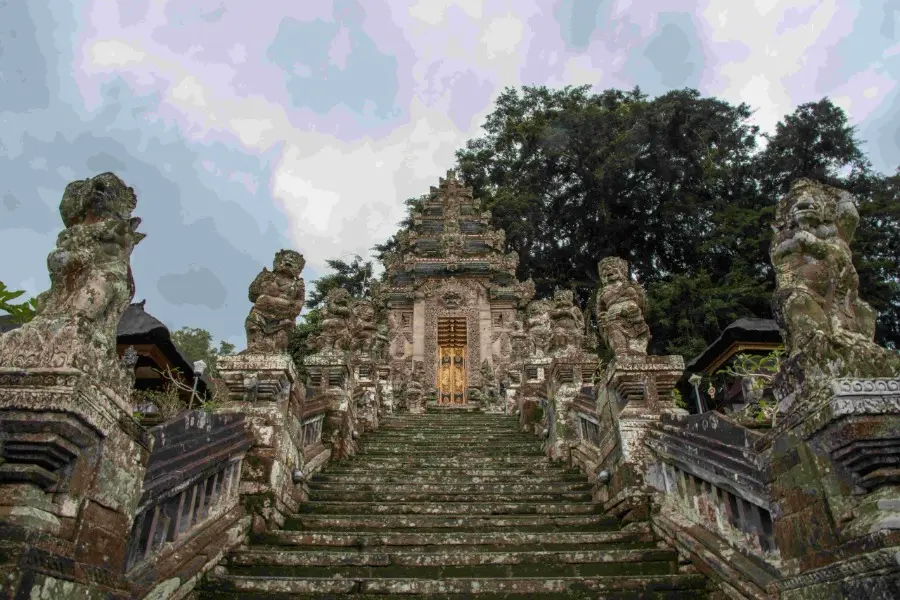
Next, from the first courtyard, a stone staircase leads you upward. A pair of guardian statues, known as dwarapala, fiercely flank these stairs. In total, Kehen Temple features 11 terraced levels built naturally into the hillside.
Along the boundary walls of each terrace, you will spot amazing stone relief panels. Artisans carved these panels to show scenes from the famous Mahabharata and Ramayana epics. Interestingly, some panels show distinct carving styles you will not see in other Balinese temples.
On the third terrace, you will find a wooden and stone kulkul pavilion. Villagers use this drum tower to call people for religious ceremonies.
Finally, the highest terrace remains strictly off-limits unless Hindus are actively performing ceremonies. This top courtyard holds a beautiful meru structure, which perfectly symbolizes Mount Meru.
Entrance Tickets, Opening Hours & Complete Dress Code 2026
Entrance Tickets (2026)
Ticket prices for foreign tourists range from Rp 50,000 to Rp 75,000 per person. Importantly, this price includes a sarong (kamben) that you must wear inside. Meanwhile, domestic tourists pay lower rates. You should always check current prices on-site, as local village policies can change them.
Hours of Operation
Generally, Pura Kehen opens daily from 8:00 AM to 6:00 PM WITA. However, management temporarily closes the temple to the public during major ceremonies. Therefore, you should check the Balinese ceremony calendar (Odalan) before you visit.
Dress Code
Since locals actively use Pura Kehen for worship, you must follow strict dress code rules:
- First, wear a sarong and shawl to cover your lower body (staff provide these at the entrance).
- Second, avoid revealing or see-through clothing.
- Third, women who are menstruating cannot enter the innermost sacred areas.
- Lastly, you can wear shoes on the lower terraces.
How to Get There from Ubud, Kintamani & Denpasar
From Ubud (approx. 45–60 minutes)
Ubud acts as the most popular starting point. The best route takes you via Jalan Tampaksiring toward Bangli. Additionally, this path lets you easily stop at Tampaksiring and Pura Tirta Empul along the way.
From Kintamani (approx. 30–40 minutes)
The distance from central Kintamani to Bangli spans only 20 to 25 kilometers. Furthermore, drivers enjoy great road conditions and beautiful scenery while descending toward the town.
From Denpasar/Kuta (approx. 1.5 hours)
If you start in Denpasar, you should head toward Gianyar and then turn to Bangli. Alternatively, travelers leaving from Kuta or Nusa Dua can take the Bali Mandara Toll Road and quickly reach Gianyar via Sakah.
Combine with the Kintamani Geopark Tour from Tan’s Estate
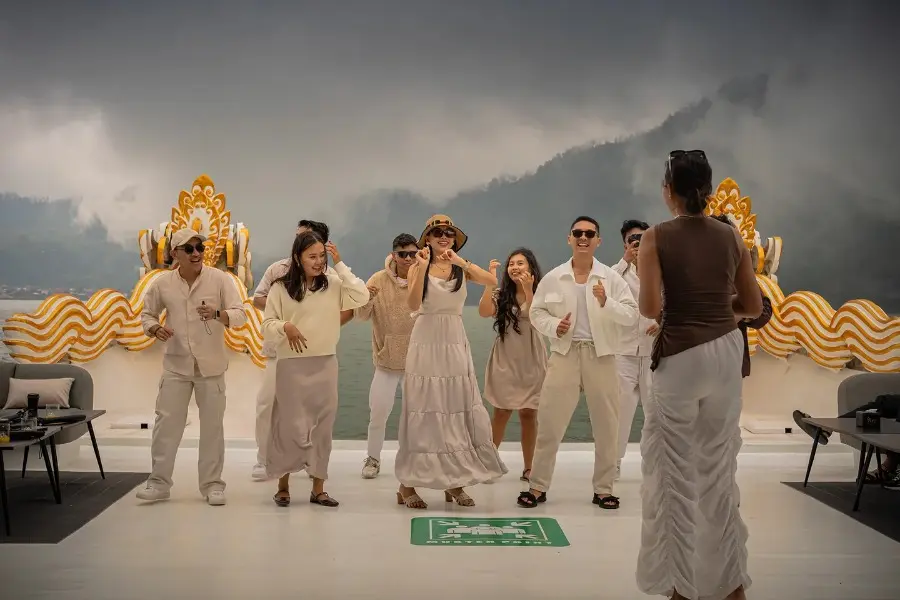
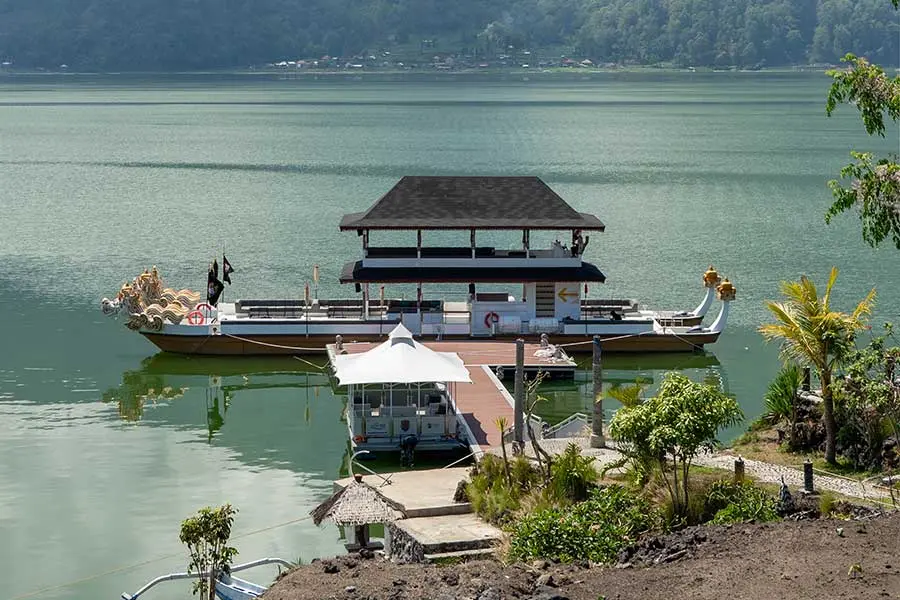
Cruise on Lake Batur | Royal Songan Cruise | Tan’s Estate
To make the most of your trip, you should combine your temple visit with an exclusive tour. Specifically, we highly recommend booking a geopark experience with Tan’s Estate.
Tan’s Estate sits beautifully on the edge of the Batur Caldera in Kintamani. This premium destination offers amazing food paired with stunning views of Mount Batur and Lake Batur.
Ultimately, this combination saves you time and cuts down on transport costs. Moreover, it gives you a much richer travel experience. In just one day, you will explore royal history at Kehen Temple and enjoy breathtaking natural wonders nearby.
For more details, Tan’s Estate provides flexible packages. You can easily customize them to fit your specific schedule and group size.
Photography Tips: Best Spots & Times at Kehen Temple
Best Time
The morning golden hour between 7:30 and 9:00 AM works best. During this time, soft eastern light dramatically illuminates the stone carvings. Conversely, you should avoid visiting at midday. The harsh afternoon sun creates heavy shadows that ruin photos.
Top Photo Spots
- Main staircase: Capture the guardian statues from below using a wide-angle lens for a striking, symmetrical look.
- Banyan tree: Photograph the giant roots in the first courtyard to add rich visual texture to your portraits.
- Stone reliefs: Zoom in closely on the 2nd and 3rd terraces to capture the detailed Ramayana carvings.
- Bale Kulkul: Shoot the drum tower from a low angle to highlight its impressive size.
- The highest accessible terrace: Enjoy taking wide panoramic shots of the sprawling temple complex and the distant Bangli valley.
Photography Etiquette Tips
Always ask permission before snapping photos of locals who are praying. Additionally, you must turn off your flash near the altar areas. Most importantly, if a ceremony happens, put your camera down and simply watch. The real-life experience always beats a quick photo.
Conclusion
Visiting Kehen Temple in Bali adds more than just another stop to your trip. Truly, it helps you understand Balinese culture on a much deeper level. Inside this single complex, you will see exactly how royal history, sacred architecture, and spiritual life perfectly merge.
Furthermore, this temple successfully guards its ancient charm against the busy tourism industry. Every single step you take adds to a story that spans nearly a thousand years.
Therefore, if you plan to visit Kintamani, make Kehen Temple the absolute highlight of your day. Pair it with an exclusive geopark tour at Tan’s Estate to experience the very best of Bali.
FAQ
What makes Kehen Temple different from other Balinese temples?
Kehen Temple stands out because of its unique 11-tiered structure, the giant banyan tree in the main courtyard, and its rare stone reliefs. As the former royal temple of Bangli, it holds deep historical and spiritual meaning.
Is Kehen Temple in Bali open every day?
Yes, management opens the temple daily from 8:00 AM to 6:00 PM WITA. However, they temporarily close it to the public during religious ceremonies (odalan).
How long should I plan to visit Kehen Temple?
You should plan for at least 1.5 to 2 hours. This timeframe lets you comfortably explore everything from the first courtyard up to the highest terrace.
Are there tour guides available on-site?
Yes, you can find several local tour guides near the parking area. However, we highly recommend booking a certified guide through a reputable travel agency to ensure you get accurate historical facts.
What are the transportation options to Kehen Temple?
You will not find direct public transportation to the site. Therefore, we recommend renting a vehicle or hiring a private driver. The drive takes about 45–60 minutes from Ubud, 1.5 hours from Denpasar, and 30–40 minutes from Kintamani.