
Kintamani Tour Bali
June 26, 2025
Ulun Danu Batur Temple
June 26, 2025
The Story of Penglipuran Village, Bali “Living legend”
There aren’t many villages in Bali that can make a tourist pause and ask: is this place real? Penglipuran Village is one of them. Some call it too neat, too organized. But behind that order lies a much deeper story, about a community that for centuries chose tradition not because it was forced to, but because of belief.
Penglipuran Village vs. Traditional Balinese Villages: Which One is More Authentic?
Before you book a tour, there’s a question that needs to be answered first: is this village the most authentic traditional village in Bali, or is it simply the most photogenic?
Compare it with Tenganan in Karangasem as the hometown of the Balinese Aga tribe. As the indigenous people of this island and the difference is immediately felt. Tenganan does not feel curated. Its citizens still carry out ancient Pandan War ceremonies and weave double-ikat geringsing cloth without a souvenir shop on their doorstep. Trunyan is located near Lake Batur and when going further with the tradition of open burial which for many tourists feels gripping.
Penglipuran has been designated as a tourist village by the government since 1993. Each house faces the same direction and the main road is very clean. Visitor reviews are split in two: one side feels like “walking through people’s homes that have been turned into souvenir shops, while the other side calls it a sincere dive into Balinese philosophy.
Both are not wrong. Penglipuran Village is real for people who really live here, but it has been shaped by tourism in a way that does not happen in Tenganan or Trunyan. Knowing this before coming doesn’t ruin the experience. Quite the opposite, making your experience much more meaningful.
Explore other attractions in Kintamani:
The Unique Social Rules That Make Penglipuran Village Truly Different
This is where the village separates itself from all other destinations in Bali and almost all tourist articles completely miss this point.
Polygamy here is not only not recommended but is indeed officially banned. The man who takes the second wife must leave the main area of the village (Karang Kerti) and move to the outer zone called Karang Memandu. His rights as a member of the community were revoked. He is not allowed to use public roads, enter temples, or participate in traditional activities. The village will build him a house, but he lives as a social outsider.
The village government itself runs using a traditional system called Prajuru Desa Adat, with a legislative council consisting of exactly 12 members or Kanca Roras who have been elected through a community mandate. Marriage with people from outside the village is allowed, but the husband must still carry out all his obligations as a resident of Penglipuran traditional village regardless of where his wife comes from.
This is not a rule for tourists. This is a social law of life that has been maintained for centuries. This also explains why this place feels so different from any other place in Bali. The order you see is not imposed by the tourism office, but maintained by the community itself.
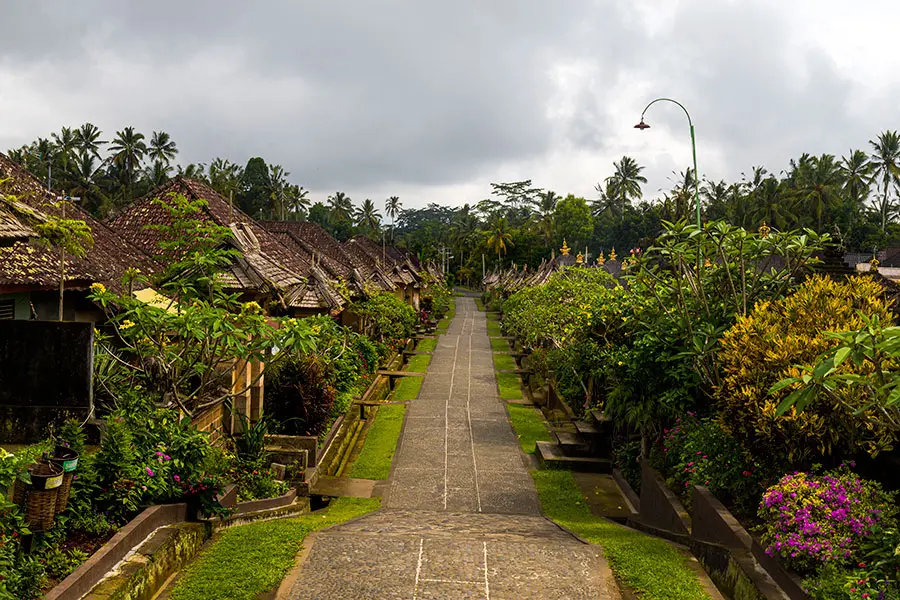
penglipuran village | tansestate.com
Penglipuran Village as a Community-Based Tourism Model
Since 1993, the village has been operating with a deliberate philosophy: rejecting tourism capitalism by embracing community-based management. Every ticket sold goes back to village care and cultural preservation. Admission is not just an admission fee as it is a direct contribution to the people who keep this place alive.
But that model is now under pressure.
Wayan Sumiarsa as the head of Penglipuran Tourism Village openly admitted that overtourism is a real threat. “If this village is left like this, there will be many negative impacts,” he told reporters. “What we are aiming for to become sustainable tourism will be very difficult to achieve.”
Thousands of visitors come every day in the peak season. The main road designed for village life now facilitates the simultaneous flow of two-way tourists. Some residents turned their traditional angkul-angkul gates into souvenir stalls selling similar items to the shop next door.
This is the uncomfortable truth of visiting an already overly successful destination. But it’s also an argument to come up with a more conscious way. Tourists can arrive early and spend some real time rather than just taking quick photos and buying directly from the locals. Travelers who approach it in this way consistently report the most meaningful experiences.
For those of you who are interested in the concept of sustainable tourism in Bali, this community-owned, culturally regulated village management model remains one of the best examples on the island, despite facing real growth challenges.
What You Won’t Find Here — and Why That’s Exactly the Point
Tourists will not find motorbikes, cars, or minimarkets on the main road.
The main area of the village is vehicle-free, which means the only sounds you hear are footsteps, birdsong and the occasional gamelan music flowing from inside the courtyard.
The bamboo forest next to the village amplifies this effect. Walking through it with the Bamboo Cafe standing quietly in the middle feels completely detached from the bustling Bali tourist circuit. Bamboo in Penglipuran is among the best in the province and is widely used by residents as the main building material. For kitchens (pawon), family ceremonial halls (bale sakenem), and community spaces (bale banjar).
What you will find: rent Balinese traditional clothes (kebaya for women, udeng and kamen for men), small stalls that serve loloh cemcem as a traditional herbal drink typical of this village. Also discover villagers who live their real daily lives, from morning offerings to gardening.
Admission: IDR 50.000 for adults, IDR 30.000 for children. Parking is available outside the village perimeter. Opening hours 08.15 to 18.30 daily.
Galungan at Penglipuran Village: When to Come for the Best Version of This Place
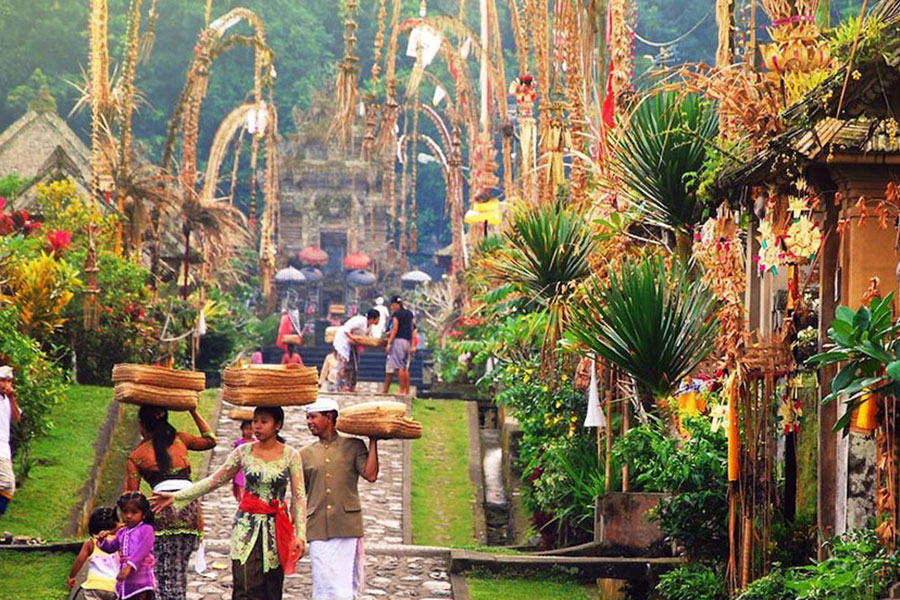
If your schedule allows for a bit of flexibility, tailor a visit to Penglipuran Village with Galungan celebrations. It is one of the most important celebrations in the Balinese Hindu calendar, which takes place once every 210 days.
During Galungan, every house in the village erects a penjor or towering bamboo pole decorated with coconut leaves, fruits, and woven ornaments that curve above the main road.
On Galungan Day, the atmosphere changes completely because this is no longer a tourist destination, but a community that is undergoing one of its most sacred rituals. Photography is allowed in most areas, but always ask permission before pointing the camera at someone in the process.
On weekdays, the best time to arrive is before 09.00 am. Tourists will get softer lights, quieter streets, and you’ll find moments of true tranquility that are impossible to find after 11:00 when the tour buses start arriving.
Penglipuran Village + Tan’s Estate: A Full-Day Bangli Itinerary!
Most Bali itineraries treat a visit to this historic village as a self-contained stop.
Penglipuran Village is located in Bangli Regency and is the same district as Tan’s Estate at Batur Geopark. This destination is one of the eco-adventure destinations built in a UNESCO-recognized geopark around Mount Batur. Both are about an hour’s drive away by car and combine the two to create an amazingly complete full day.
Recommended itinerary arrangement:
- 7:30 a.m. — Arrive at the village before the crowd comes. Walk along the main road, explore the bamboo forest, have breakfast at the Bamboo Cafe.
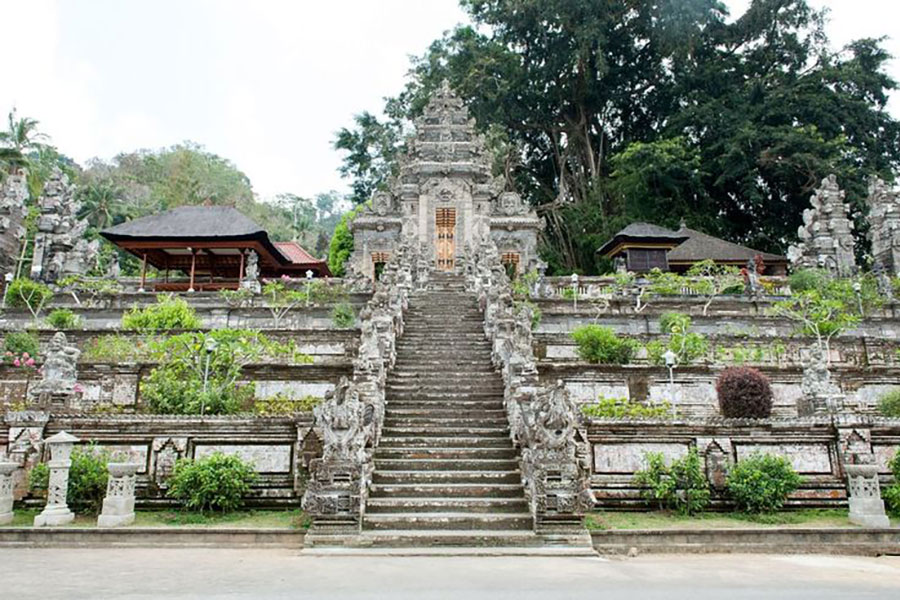
- 10.00 — Depart for Kintamani. Stop by Kehen Temple as one of the most important temples in Bangli Regency. And a place of worship that is also visited by Penglipuran residents themselves.
- 11.30 — Arrive at Tan’s Estate for activities at the Batur Geopark’s volcanic landscape, guided nature experiences, and lunch with a view of Lake Batur.
- 15:00 — Start the journey back to the inn.
- This combination works because the two experiences complement each other, not compete. The cultural serenity in the morning and the geological majesty in the day make the two make each other feel more meaningful.
FAQ
Do people still really live in Penglipuran Village?
Yes. A total of 76 family yards in the main area of the village are occupied by residents who live, work, and carry out daily ceremonies there. Tourism has transformed the village economically, but it still functions as a community governed by traditional customary laws.
What is the ideal time to visit?
Allocate 1.5 to 2 hours for a relaxing visit that includes a bamboo forest. Less than an hour feels rushed; Over 2.5 hours there aren’t many new areas to explore unless you come during the ceremony.
Is this village too commercial to visit?
It depends on your own expectations. Come with the expectation of a raw, unfiltered village experience and you might be disappointed. Come with the understanding that these are communities that choose tourism on their own terms and manage that choice carefully.
How far is this village from Ubud?
About 1 hour by car depending on traffic. From South Bali (Seminyak, Canggu, Uluwatu), expect a 1.5 to 2 hour drive.
Can I visit independently without a tour?
Yes. A base map is available at the entrance. But hiring a local guide adds substantial context, especially about the village’s unique social laws and the pretend function within them.