Batur Natural Hot Spring
June 24, 2025
Kintamani Glamping
June 24, 2025
Trunyan Village: An Ancient Bali Aga Village
Behind the beauty of Lake Batur and the foothills of Mount Batur lies Trunyan Village. This place holds one of Bali’s most ancient traditions. Unlike most Balinese villages, this settlement serves as home to the Bali Aga people. Significantly, these people represent the original ancestors of Bali. Notably, they have maintained their customs long before Hindu-Javanese influence arrived on the island.
Trunyan Village possesses international fame for its open-air burial tradition. Instead of cremating or burying bodies, the locals place them above ground under a sacred tree. This tree, the Taru Menyan Tree, naturally neutralizes the smell of decomposition.
Explore other attractions in Kintamani:
What is Trunyan Village?
Trunyan Village sits in the Kintamani District, Bangli Regency, Bali. Since it lies on the eastern shore of Lake Batur, locals access it only by water. Consequently, you must take a small boat from Kedisan Pier to reach it. The crossing takes about 20–30 minutes across a calm volcanic lake.
Essentially, the name “Trunyan” comes from “Taru Menyan,” which in Old Balinese means “fragrant tree.” This name refers to a sacred tree growing in the village cemetery. This large tree possesses supernatural abilities to neutralize the odor of corpses lying in the open.
Furthermore, the people of Trunyan Kintamani belong to the Bali Aga group. Their lifestyle differs significantly from the majority of Balinese who adhere to Hindu Dharma. Instead, they maintain their own belief system, rituals, and customs to this day.
History and Cultural Background of Trunyan Village
The people of Trunyan trace their ancestry back to the pre-Hindu era. Moreover, their local belief, called Agama Bayu, remains dominant in Bali. This belief system worships the wind, the stars, and the forces of nature.
One key belief involves Mount Batur as a manifestation of the god of fire. Therefore, the locals view cremating a corpse as an act of encroachment on the god’s authority. This explains why no one performs cremation in Trunyan.
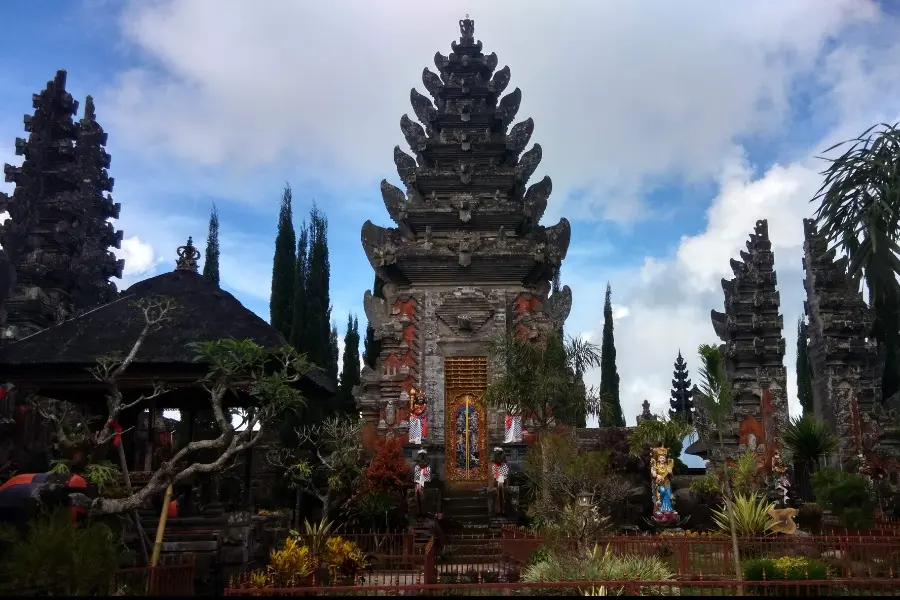
The village’s patron deity, Ratu Gede Pancering Jagat, resides at the main temple, Pura Pancering Jagat. This temple serves as the spiritual center of Trunyan’s life. Importantly, visitors may visit this religious site if they show respect.
Mepasah Ritual — Trunyan Village’s Open Burial Tradition
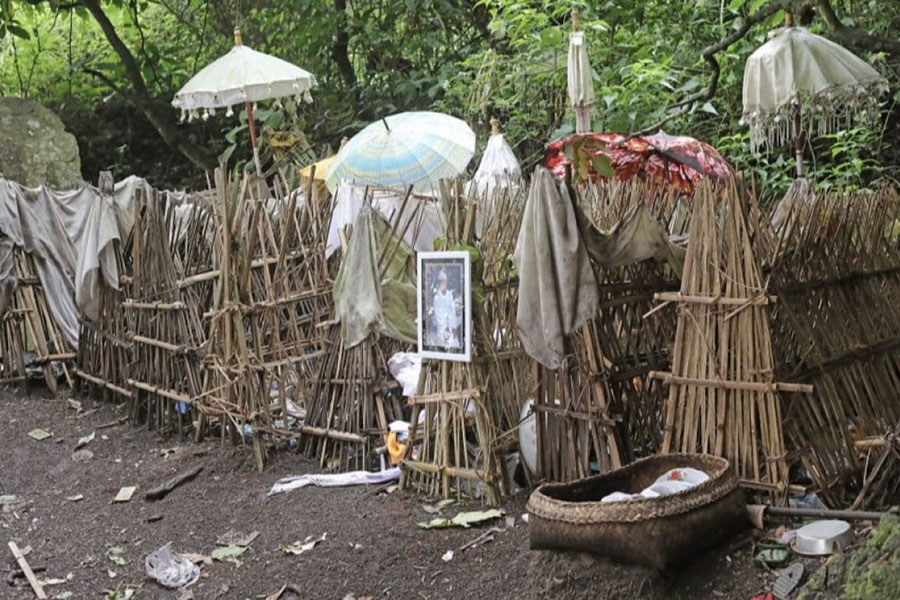
The most famous tradition of Trunyan Village is the burial ritual known as Mepasah. In this ritual, villagers do not cremate or bury the body underground. Instead, they cleanse the body with rainwater, wrap it in white cloth, and place it above ground in a special area. Locals call this area Seme Wayah, which features a Taru Menyan Tree.
The family places a prism-shaped covering made of woven bamboo, called ancak saji, over the body. Nature then decomposes the body over time. Surprisingly, this burial area does not emit the pungent odor one might expect. This phenomenon has attracted the attention of many researchers and tourists for years.
The Taru Menyan tree emits natural compounds from its roots, trunk, and leaves that neutralize the smell of decomposition. Because the villagers consider the tree a sacred living entity, no one may cut down or trim it.
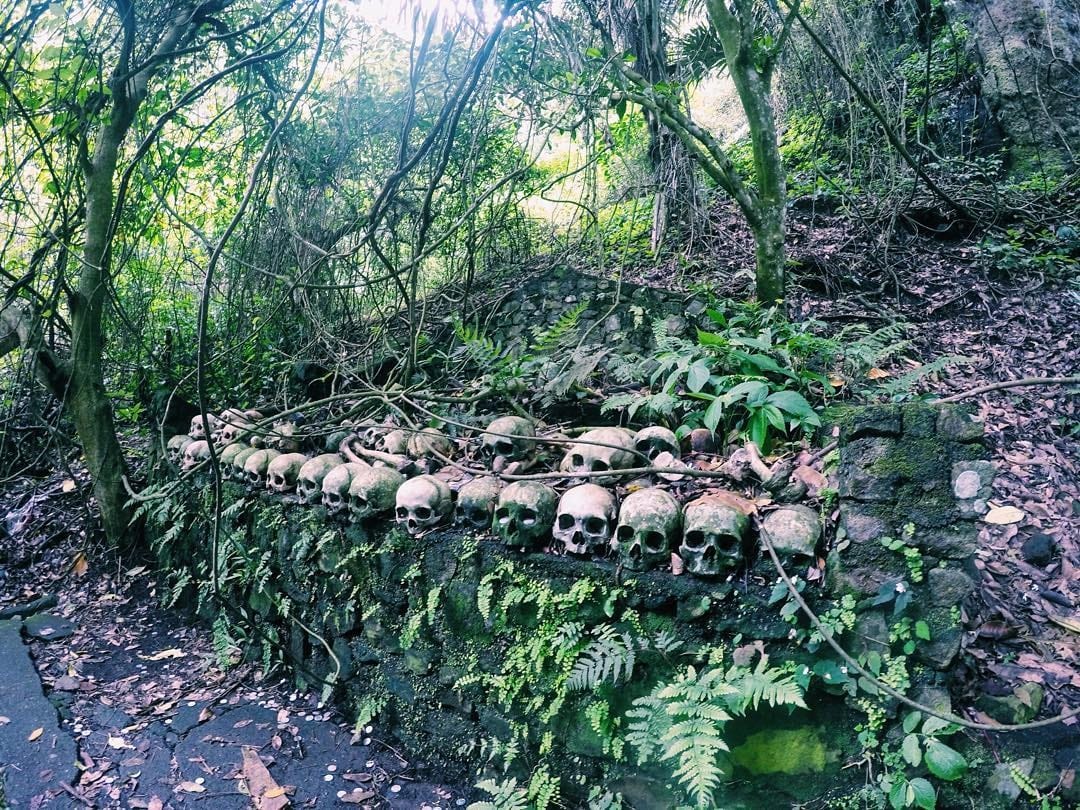
This tradition applies specifically to married Trunyan residents who die. Once the body decomposes to bones, the family collects the skull and arranges it neatly on a stone altar near the tree.
Three Types of Seme in Trunyan Village
One fact that tourists rarely know is that Trunyan Village operates more than one cemetery. Here is a comparison:
| Types of Graves | Criteria | Treatment of the Corpse |
| Seme Wayah | Married adult, natural death | Placed open under Taru Menyan Tree, only covered with food |
| Seme Muda | Died by accident or unnatural death | Buried separately, treated differently because it is considered imperfect |
| Seme Rare | Unmarried infants and children | Returned to earth (buried), considered sacred and uncontaminated by the world |
Ultimately, this three-grave system embodies the complex spiritual beliefs of the Trunyan people regarding death. For them, the manner of death determines how they should handle the remains.
The Taru Menyan Tree
No discussion of Trunyan Village feels complete without addressing the tree central to all these traditions. The Taru Menyan Tree is a massive tree growing in the center of the Seme Wayah burial area. Naturally, this tree acts as the spiritual guardian of the entire burial area.
Modern science has not fully confirmed the tree’s ability to neutralize odors. However, many researchers suspect that this tree produces certain phytochemical compounds that inhibit the odorous decomposition process. Regardless of the scientific explanation, the tree’s presence remains central to Trunyan Kintamani’s cultural identity.
Daily Life in Trunyan Village
Beyond its renowned burial traditions, Trunyan Village remains a quiet place with a strong sense of tradition. Residents still utilize traditional architectural styles for their homes. Meanwhile, residents go about their daily lives, farming, fishing, and maintaining ancestral rituals.
The village deliberately distances itself from outside influences to preserve its traditions. Furthermore, visitors can observe the process of making local handicrafts and witness the residents’ daily lives, which follow a rhythm that has existed for centuries.
How to Get to Trunyan Village and Visiting Tips
Travel Route
- From Denpasar or Ngurah Rai Airport: approximately 2–2.5 hours drive to Kedisan Pier
- From Ubud: approximately 1.5 hours to Kedisan Pier
- From Kintamani town: approximately 30–40 minutes to Kedisan Pier
- From Kedisan Pier: take a traditional boat for approximately 20–30 minutes to Trunyan Village
Important Tips Before Visiting
- Use the services of an authorized local guide for a more meaningful experience and to directly support the local community.
- Tourists should dress modestly. Therefore, avoid revealing clothing, especially when entering the cemetery and temple areas.
- Do not touch, move, or remove bones and skulls in any form.
- Prepare cash for boat rental (around IDR 200,000–400,000/boat) and donations at the cemetery.
- Visit in the morning or afternoon for the best light and calm lake conditions.
To complete your trip to Trunyan Kintamani, you can combine this visit with an experience at Tan’s Estate. This destination offers glamping activities, a cruise on Lake Batur, and various other modern tourist facilities.
Conclusion
Trunyan Village is more than just a typical tourist destination in Kintamani. This ancient village directly reflects Bali’s oldest civilization. Tourists who visit will see a place where tradition, belief, and nature blend together. In short, the Mepasah ritual, the Taru Menyan Tree, and the three-grave system represent unique intangible cultural heritage sites.
If you seek an authentic and immersive Balinese cultural experience, Trunyan Kintamani is the perfect choice. Consequently, come to this village with respect and a passion for learning. Plan your visit to Trunyan Village today and make this trip part of your most meaningful exploration of Bali.
Frequently Asked Questions (FAQ)
Are the Trunyan cemeteries truly odorless?
Yes. Experts believe the Taru Menyan trees growing in the cemetery area contain natural compounds that neutralize the odor of decomposition. Many visitors and researchers have observed this phenomenon over the years.
Who may be buried in Seme Wayah?
Only married Trunyan residents who died of natural causes. The village places victims of accidents or unnatural deaths in separate cemeteries (Seme Muda).
How much does it cost to take a boat to Trunyan Village?
Boat rental fees from Kedisan Pier range from IDR 200,000–400,000 per boat, depending on your negotiation. We highly recommend using an authorized local guide.
Is Trunyan Kintamani safe to visit?
Yes, it is safe as long as you follow local customs. Do not touch the bones or skulls of the deceased in the cemetery. Tourists should dress modestly and always respect the cemetery area as a sacred place.